Switch Fraternity App: What is it and should your chapter use it?

If you're a fraternity treasurer or president, you may have heard about Switch for your chapter's banking setup.
So what is Switch, how does it work, and is it the right call for your chapter? This is an honest, treasurer's-eye review of what Switch does well, where it leaves you stuck in spreadsheets, and why most chapters we talk to end up moving their dues and fraternity banking to MyGreek instead.
What is Switch?
Switch is a modern banking app built around shared finances, meaning money a group manages together. It's used by friend groups, roommates, clubs, nonprofits, and Greek chapters. At its core, Switch gives a group three things: shared accounts to hold money, MoneyPools to collect it, and Visa debit cards to spend it, with banking through Thread Bank (Member FDIC).
For a chapter coming from a single shared debit card and a pile of Venmo requests, that's a step up. But holding and moving money is only half of a treasurer's job. The other half is knowing exactly who owes what and getting it collected. That's where Switch and a purpose-built chapter platform really diverge, so let's dig in.
How to use Switch
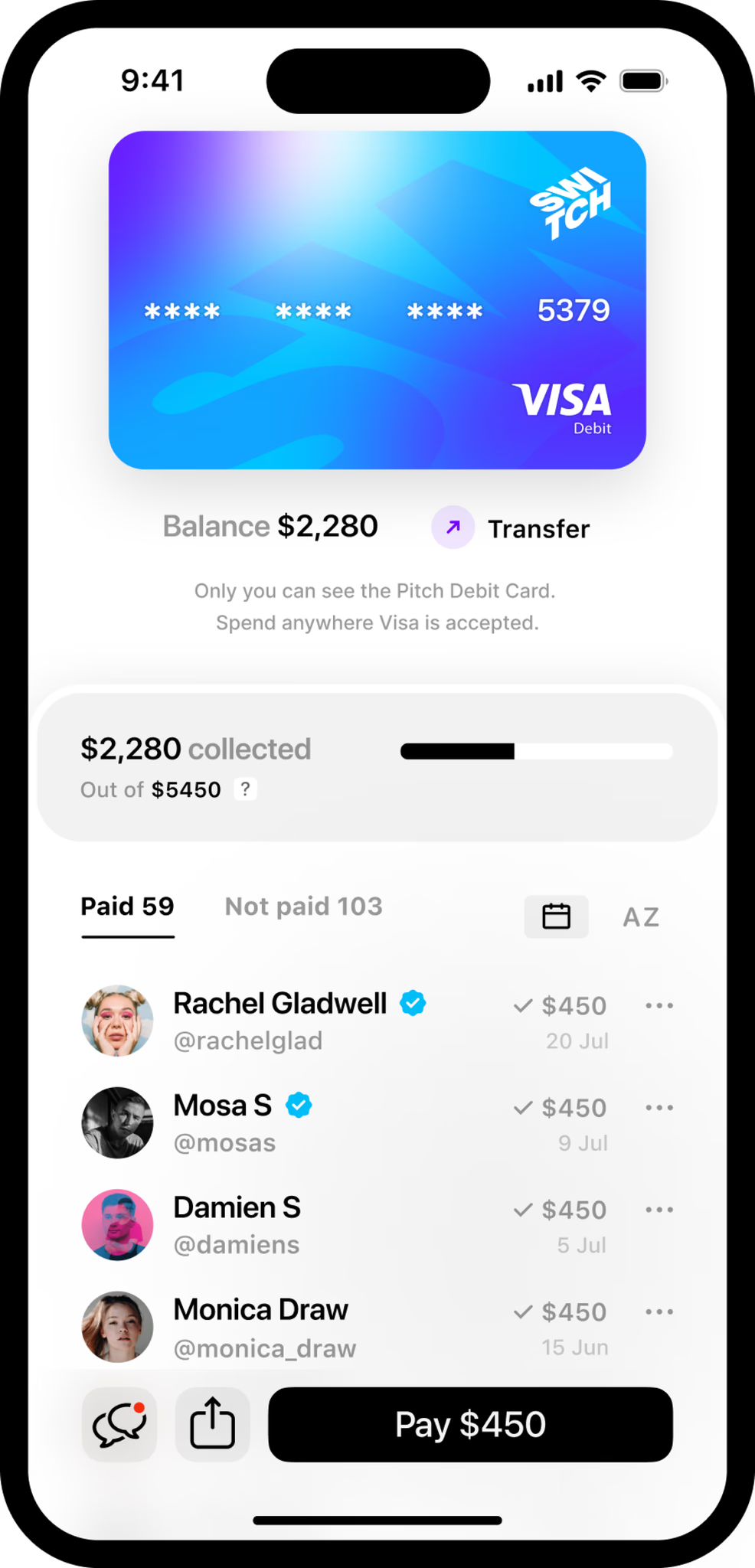
Note: The Switch app will look different for greek organizations.
What you need to get started
Getting set up is admin-driven. A chapter officer creates the organization account, configures roles and permissions (Switch supports multiple admins, and you can hand control to next year's officers via Face ID), and invites members. Members join a MoneyPool through a joinswitch share link, and contributors don't have to download the app to pay, though they do have to interact with the pool.
How to bill members with Switch
Billing runs through MoneyPools. Say you're collecting $500 in spring dues: you open a MoneyPool, set the amount, and drop the link in your group chat. Switch then shows you who has contributed to that pool.
But here's the catch: a MoneyPool is a bucket, not a bill.
- Members have to find the link and opt in to the pool
- Switch tracks contributions to the pool, not a running balance for each member across the semester
- A new charge (a formal, a fine, next month's dues) means a new pool, and members have to join again
So while Switch tells you who paid into a given pool, it doesn't keep a per-member ledger of everything a brother owes across the year. That reconciliation still lands on the treasurer.
How to make a payment in Switch
To pay, a member opens the MoneyPool link and contributes by debit card, credit card, or Switch balance. It's genuinely quick. The friction is structural: paying is tied to joining a pool, so anyone who ignores the link or misses the next pool simply never shows up as owing anything, because Switch was never told to charge them in the first place.
How to manage your money in Switch
Once collected, funds sit in a chapter Account. You can spin up separate accounts for different purposes like Rush, Social, and Brotherhood, and issue Visa cards (virtual or physical) tied to each, with per-card spending limits you can freeze or close anytime. This is one of Switch's genuinely strong areas: it kills the single shared debit card and the "who has the card?" scramble.
How to withdraw your money from Switch
Standard withdrawals to a linked external bank account are free; instant transfers carry a fee. You start a payout from the organization's account under Settings → Withdraw to an external account. Because Switch is real banking (Thread Bank, Member FDIC), you can also deposit cash, mail checks, and send wires directly instead of moving money elsewhere first.
How much does Switch cost?
Switch has a free tier, but the features a chapter actually wants sit behind paid plans. As of this writing there are three tiers:
- Standard: Free. Unlimited shared accounts, MoneyPools, and virtual cards; send and receive money; limited text blasts; FDIC insurance.
- Pro: $10/month (or $100/year). Adds two physical debit cards a year, unlimited text blasts, free mailed and printed checks, fee-free ATMs, and higher cashback at partner retailers. The fee can be waived with a $5,000 minimum balance.
- Premium: $100/month (or $900/year), organizations only. Adds 990-N and 990-EZ tax-filing assistance, "send members to collections," an account concierge, and priority support. Waivable with a $50,000 minimum balance.
On the payment side, members contributing to a MoneyPool can pay by debit card, credit card (which typically carries a card-processing fee), or Switch balance. So "free" is real for basic use, but a chapter that wants collections, tax filing, and unlimited communications is looking at the $100/month Premium plan.
Is Switch worth it?
So, should you consider Switch if you're in the market for a collections and banking platform? Lets take a summarized look at some of the pros and cons of using Switch.
Switch pros
- A genuinely free tier. Basic collection and spending cost nothing, with no per-member fee, a real plus over legacy platforms that charge $36 to $60 per member per year.
- Fast, low-friction setup. Opening a MoneyPool and sharing a link takes seconds, and contributors don't have to download an app.
- Solid spending cards. Physical and virtual Visa cards with per-card limits and instant freeze, a clean way to retire the single shared debit card.
- Consumer perks. Cashback at partner retailers and the usual modern-app niceties.
Switch cons
- No roster-based member billing. This is the big one. Switch collects into pools, not from members. It doesn't hold a per-member balance of what each brother owes across dues, fines, and formals, so reconciling who owes what still happens in a spreadsheet.
- No per-member payment history. There's no dashboard showing each member's running balance and payment history over the semester. You can see who funded a given pool, not who's behind overall.
- Members must join each pool to pay. Paying is tied to opting into a pool, so a member who ignores the link never shows up as owing anything, and the treasurer has to notice and chase them manually.
- No true parent or guest billing. Parents often cover dues, but Switch has no member-tied way to bill a parent directly and credit it to that member's balance.
- Communications are basic blasts. Switch added text blasts (limited on the free plan, unlimited on paid), but they're broadcast messages, not automated reminders tied to each member's balance and due date. You're still manually nudging whoever's behind.
- The org features cost $100/month. Collections and tax filing live on the Premium (organizations) plan at $100/month, and even that covers only Form 990-N and 990-EZ, so larger chapters filing the full Form 990 handle it elsewhere.
- Payment plans aren't treasurer-controlled. Switch offers "pay in installments," but members pick their own plan or BNPL, so treasurers can't enforce a specific schedule, which makes it harder to predict when dues actually land.
Switch vs MyGreek
Switch is a solid banking app. But almost every con above comes down to one thing: it's a banking app, not a chapter finance platform. It moves money, but it doesn't know your roster, track who owes what, or chase members for you, so the treasurer is still living in a spreadsheet.
That's the gap MyGreek fills. Here's how the two compare on the things treasurers actually deal with:
| What treasurers deal with | Switch | MyGreek |
|---|---|---|
| Bill individual members | MoneyPool links only | Roster-based billing tied to each member |
| Track who still owes | No member balances | Live per-member balance tracking |
| Roster each semester | Members rejoin every pool | Persistent roster, year over year |
| Parents paying dues | No parent access | Parent notifications + guest checkout |
| Payment plans | Members set their own / BNPL | Treasurer-controlled auto-drafting plans |
| Reminders | Basic text blasts, not per-member | Automatic reminders tied to each member's balance |
| Analytics | No dashboard | Collections dashboard + budgeting |
| Form 990 | 990-N / 990-EZ only | All three 990 forms, in-house preparers |
| Cost of org features | Collections + 990 need Premium ($100/mo) | Included, no per-member fees |
| Banking + cards | Yes | FDIC-insured chapter accounts + officer cards |
The bottom line
Switch is a fine banking app for casual groups. But a fraternity or sorority chapter isn't a casual group. You have a roster, recurring dues, parents who pay, and a Form 990 to file. For that you need a chapter finance platform, not just a place to park money.
MyGreek gives you the banking and cards Switch has (FDIC-insured chapter accounts and officer cards), plus everything Switch doesn't: roster-based dues collection with per-member balances, automatic reminders, treasurer-controlled payment plans, real-time budgeting, parent billing, and full Form 990 filing. Same money in and out, minus the spreadsheet.